

Identified hazardsRocks, Isolation, Powerful swell
SURF · MIGUEL™ PREMIUM
Fajã da Caldeira de Santo Cristo
Fajã da Caldeira de Santo Cristo makes more sense when you arrive on foot. Below São Jorge’s steep northern cliffs, the fajã brings together a coastal lagoon, a small settlement, a chapel and a coastline known for surfing and bodyboarding. It is not simply a viewpoint: access, terrain and weather are part of the experience.
See this surf spot with Miguel™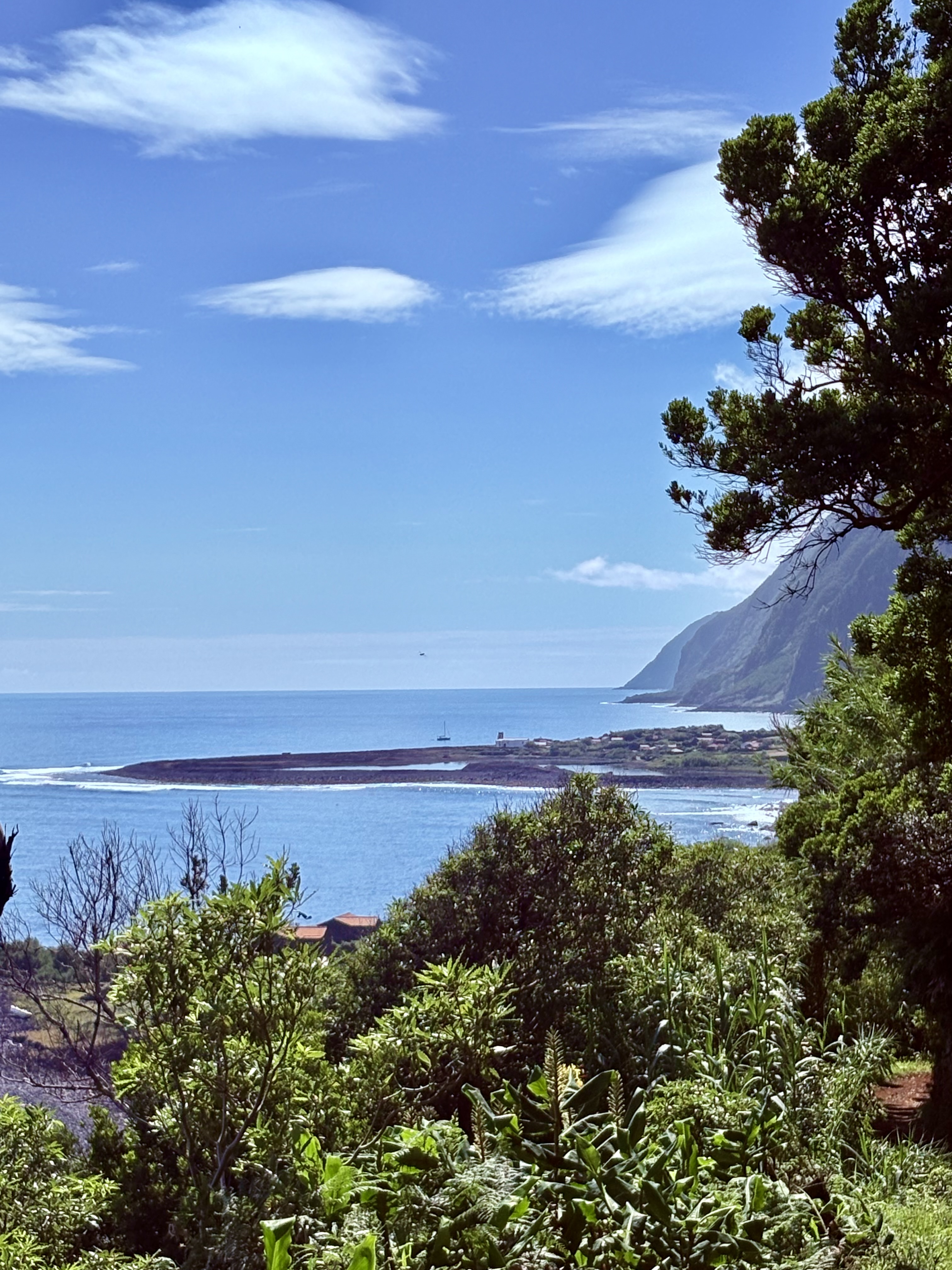
i
Photo informationPhoto : DHT Azores · DHT interne
Wave typePoint break
Required levelAdvanced / expert
ExposureNorth
Ideal swellNorth, North-West, WNW
PREMIUM SURF MIGUEL™
Technical reading of the spot
A technical reading of the spot based on Miguel™ Surf criteria: wave setup, level, swell window, hazards and session logistics.
Technical profile

Swell windowNorth, North-West, WNW
SetupPoint break · North
Expert reading
How the spot works
This isn't a spot you stumble upon: you come to Fajã da Caldeira de Santo Cristo because you already know what you're looking for. No road reaches it — only a hiking trail, a quad bike or a boat can get you into this fajã, wedged between cliffs and lagoon. The wave itself is worth the trip: a point break that can link up for several hundred metres, left and right, recognised as one of the archipelago's most remarkable spots when conditions align. You come for the session, you stay for the silence.
Operating window
When Miguel recommends it
Miguel favours this setup when the north swell arrives clean and not too chaotic, and you've built the access hike into your schedule — this is never a spur-of-the-moment plan.
Ideal profile
Independent intermediate, Expert in larger swells
When to pass
Un unsupervised beginner.
Key hazards
Rocks, Isolation, Powerful swell
Session logistics

Access
No road reaches the fajã. From Fajã dos Cubres (accessible by car): about 1h30 to 2h on foot (PR1 SJO trail, ~4.3 km), or a quad transfer arranged by the local surf camp.
Equipment
No rental on site: bring your own board and wetsuit before the hike in.
After the session
A guesthouse (Caldeira Guesthouse & Surfcamp) sits right on the fajã, offering simple meals and lodging for surfers extending their stay; otherwise, head back along the same trail to Fajã dos Cubres.
PLACE · LANDSCAPE · EXPERIENCE
A fajã where the landscape, lagoon and trail belong together
Fajã da Caldeira de Santo Cristo is one of the Azores’ distinctive coastal lagoons. A beach ridge separates it from the ocean while a connection with the sea remains open. The area is classified as a nature reserve and special ecological area, which explains much of its landscape and environmental interest. The lagoon is particularly known for Tapes decussatus clams, part of the identity of the place and of São Jorge’s local food culture.
Their presence is also a reminder that this is a sensitive environment: local rules matter as much as the scenery. The Serra do Topo - Caldeira de Santo Cristo - Fajã dos Cubres route is the classic walking approach. The official trail is 9.3 km, linear, medium difficulty and takes about 2 h 30 on average.
It descends through endemic vegetation, passes near Cascata Pequena, reaches the chapel and interpretation centre, and then continues towards Fajã dos Cubres. Fajã da Caldeira de Santo Cristo makes more sense when you arrive on foot.
ON SITE
What you will really discover
Below São Jorge’s steep northern cliffs, the fajã brings together a coastal lagoon, a small settlement, a chapel and a coastline known for surfing and bodyboarding. It is not simply a viewpoint: access, terrain and weather are part of the experience.
A coastal lagoon at the heart of the fajã
Fajã da Caldeira de Santo Cristo is one of the Azores’ few coastal lagoons. Separated from the ocean by a coastal bar while remaining connected to the sea, it explains much of the site’s landscape and ecological interest.
PR01SJO as the main walking approach
The classic walking approach starts at Serra do Topo on PR01SJO, descends to the fajã and continues towards Fajã dos Cubres. It can also be approached from Fajã dos Cubres.
Lagoon, heritage and surf culture
The fajã is known for its coastal lagoon, clams, religious heritage, fajã landscape and reputation among surfers and bodyboarders. Clam harvesting is regulated and local rules must be respected.
A linear route that needs planning
PR01SJO is 9.3 km long, linear, medium difficulty and takes about 2 h 30 on average. You need to arrange the return from Fajã dos Cubres or organise an appropriate transfer.
CHOOSE HOW TO VISIT
Choose how to visit: Fajã da Caldeira de Santo Cristo
The right choice depends on the day’s context: available time, local conditions and how you want to experience the place.
Once that context is clear, the question becomes different: is this place right for your day today? That is where DHT separates the guide from the decision engine. The SEO pages help you learn and prepare; Miguel™ then helps you choose according to your preferences and the context available.

MARIA™
Plan your trip with Maria™
Plan your trip with Maria™Fajã da Caldeira de Santo Cristo can be integrated into your trip with Maria™, taking the overall pace of your stay into account.

MIGUEL™
Decide on site with Miguel™
Decide on site with Miguel™Miguel™ can compare this surf spot with the available conditions and the place-specific parameters when you decide.
WHEN CONDITIONS MATTER
What to know before planning your visit
This page brings together DHT editorial guidance about Fajã da Caldeira de Santo Cristo. In the Azores, weather and local conditions can change quickly, so the best choice depends on both what you want to do and the context of the moment. Use this page to compare the available options, then let Miguel™ help you decide what to do, where to go and when to go. Recommendations remain connected to the DHT catalogue and the realities of the Azores.